Wits High-Speed Video Lightning Laboratory
School of Electrical and Information Engineering | University of the Witwatersrand
Principle Investgator
The laboratory is led by Yaseen Essa, Principal Investigator and Research Head within the School of Electrical and Information Engineering at the University of the Witwatersrand. His research integrates deep learning, computer vision, and high-voltage atmospheric physics to advance automated lightning characterization and severe weather prediction frameworks.
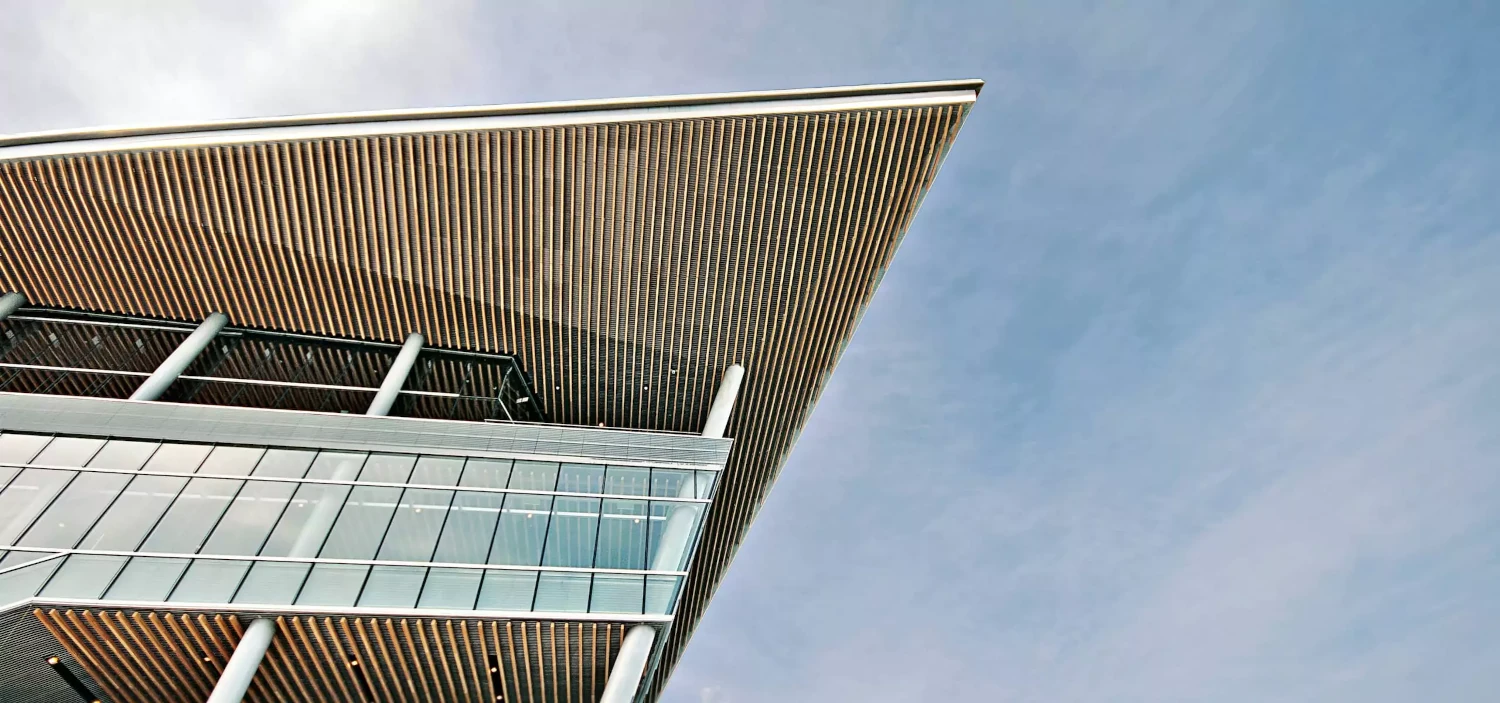
A passion for creating spaces
Our comprehensive suite of professional services caters to a diverse clientele, ranging from homeowners to commercial developers.
Renovation and restoration
Experience the fusion of imagination and expertise with Études Architectural Solutions.
Continuous Support
Experience the fusion of imagination and expertise with Études Architectural Solutions.
App Access
Experience the fusion of imagination and expertise with Études Architectural Solutions.
Consulting
Experience the fusion of imagination and expertise with Études Architectural Solutions.
Project Management
Experience the fusion of imagination and expertise with Études Architectural Solutions.
Architectural Solutions
Experience the fusion of imagination and expertise with Études Architectural Solutions.
An array of resources
The Wits High-Speed Video Lightning Laboratory is a premier research facility dedicated to capturing, analyzing, and modeling atmospheric electrical discharges with unprecedented temporal and spatial precision. Utilizing ultra-high-speed camera systems operating at thousands of frames per second alongside advanced remote sensing and machine learning architectures, our team investigates the fundamental physics of lightning. Based at the University of the Witwatersrand in Johannesburg, South Africa, we bridge high-voltage engineering, computer vision, and atmospheric science to mitigate lightning risks and improve predictive modeling across the region and globally.
What We Do
Our research unit specializes in pushing the boundaries of optical lightning observation and data-driven meteorological forecasting. Traditional lightning studies rely heavily on remote electromagnetic field measurements; however, our laboratory harnesses microsecond-resolution high-speed video imagery to directly observe, track, and decode rapid physical processes.
The primary pillars of our operational scope include:
Industrial & Infrastructure Protection: Analyzing lightning interactions with critical infrastructure—such as wind turbines and tall structures—to enhance safety standards, insulation design, and risk management protocols.
High-Speed Video Diagnostics: Capturing natural and triggered lightning attachment processes, leader propagation dynamics, downward/upward flashes, and stroke mechanics at frame rates exceeding 1,000 frames per second.
Deep Learning & Computer Vision: Pioneering automated semantic segmentation and neural network models (such as CNN-LSTM, ConvLSTM, and Xception architectures) to process complex, high-frame-rate optical footage and classify lightning characteristics without manual bottlenecking.
Thunderstorm Severity & Flash Prediction: Developing advanced time-series and autoregressive machine learning models utilizing remote sensing weather data and the South African Lightning Detection Network (SALDN) to forecast severe weather and short-term lightning activity.
Leadership
The laboratory is led by Yaseen Essa, Principal Investigator and Research Head within the School of Electrical and Information Engineering at the University of the Witwatersrand. His research integrates deep learning, computer vision, and high-voltage atmospheric physics to advance automated lightning characterization and severe weather prediction frameworks.
Lightning Publications
Our researchers actively contribute to top-tier international journals and conferences. Below is a list of publications authored by Research Head Yaseen Essa and collaborators in the field of lightning research and atmospheric science:
Essa, Y., Hunt, H. G. P., Schumann, C., Çelik, T., Nixon, K. J., Saba, M. M. F., & Warner, T. A. (2026). Predicting return stroke peak currents from high-speed lightning videos. Atmospheric Research.
Essa, Y., Hunt, H. G. P., Schumann, C., Çelik, T., Saba, M. M. F., & Warner, T. A. (2026). Upward lightning occurrence on wind turbines: duration characteristics from high-speed cameras. Electric Power Systems Research.
Essa, Y., Hunt, H. G. P., Schumann, C., & Warner, T. A. (2024). Deep learning for high-speed lightning footage—A semantic segmentation network comparison. Atmosphere, 15(7), 873.
Essa, Y., Hunt, H. G. P., Gijben, M., & Ajoodha, R. (2022). Deep learning prediction of thunderstorm severity using remote sensing weather data. IEEE Journal of Selected Topics in Applied Earth Observations and Remote Sensing, 15, 4004–4017.
Essa, Y., Hunt, H. G. P., & Ajoodha, R. (2021). Short-term prediction of lightning in Southern Africa using autoregressive machine learning techniques. (Conference Paper).
Essa, Y., Ajoodha, R., & Hunt, H. G. P. A LSTM recurrent neural network for lightning flash prediction within Southern Africa using historical time-series data. (Conference Paper).
Études Architect App
- Collaborate with fellow architects.
- Showcase your projects.
- Experience the world of architecture.

Études Newsletter
“Études has saved us thousands of hours of work and has unlocked insights we never thought possible.”
Annie Steiner
CEO, Greenprint
Watch, Read, Listen
Join 900+ subscribers
Stay in the loop with everything you need to know.